The New Golden Triangle: Bandra Bay, BKC & the Bullet Train Terminal
A deep dive into the economic, infrastructural, and lifestyle synergy shaping Mumbai’s next era of growth.
1. Introduction — The Rise of Mumbai’s New Golden Triangle
Every global city eventually discovers a triad—a cluster of three zones whose combined influence reshapes the city’s economic destiny. London has Canary Wharf + Heathrow + the Crossrail Belt. Singapore has Marina Bay + the CBD + Changi Airport. Dubai has Dubai Marina + JLT + DXB Terminal 3.
Mumbai is entering its own version of this phenomenon.
A powerful new Golden Triangle is forming between:
- Bandra Bay: Mumbai’s new luxury waterfront district
- BKC: India’s most important financial centre and the terminal for the nation’s first Bullet Train
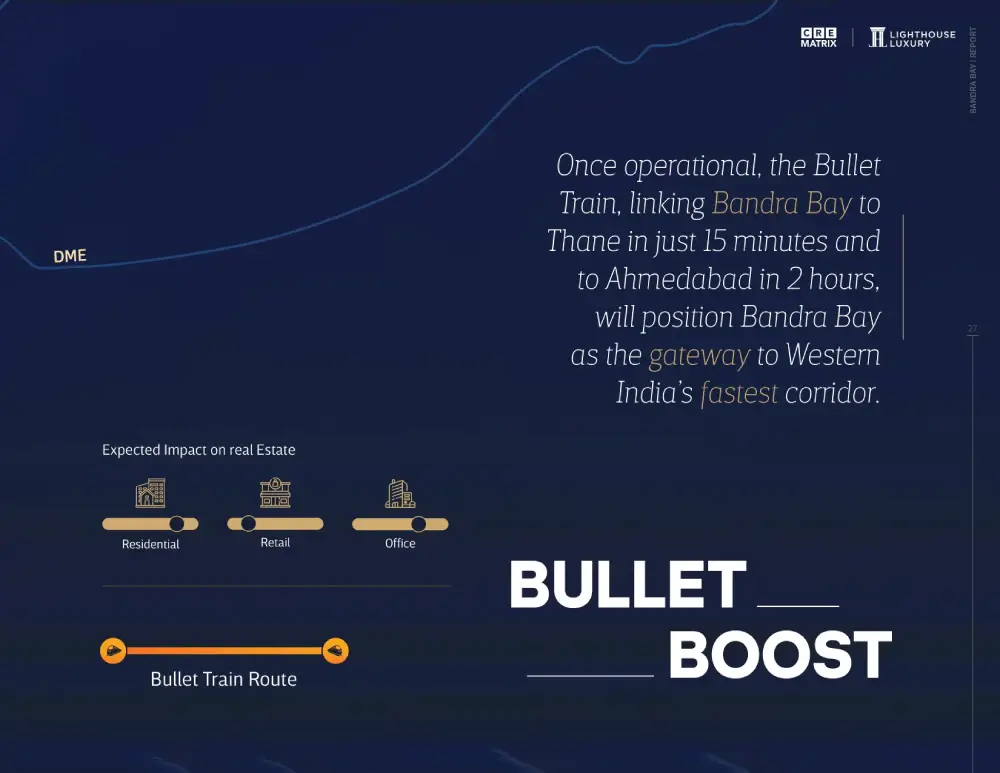
- The Mumbai–Ahmedabad High-Speed Rail (HSR): a 508 km corridor transforming interstate business mobility
This is the first time in Mumbai’s history that waterfront living, a global-grade financial hub, and a high-speed rail terminal are converging within a 5–7 minute radius.
The result is explosive
A district where mobility, capital, lifestyle, and architecture reinforce each other—driving prices, demand, development intensity, and international attention simultaneously.
This is the future of Mumbai’s urban growth—concentrated, high-value, and globally benchmarked.
2. The Three Pillars of the New Golden Triangle
Before unpacking the synergy, it’s essential to understand the strength of each anchor.
Bandra Bay — Mumbai’s modern waterfront statement
A master-planned ~8 million sq.ft. redevelopment at Bandra Reclamation led by top developers. The district is designed as Mumbai’s first cohesive, globally comparable waterfront lifestyle zone with controlled density, advanced architecture, and a curated skyline.
BKC — India’s financial command centre + High speed rail terminal
BKC hosts the headquarters of banks, MNCs, consulates, investment firms, and global service companies. It is also the official terminal for the Mumbai–Ahmedabad Bullet Train, making it the most strategically significant commercial hub in the country.
Bullet Train Terminal — India’s biggest mobility catalyst
The high-speed rail terminal at BKC reduces Mumbai–Ahmedabad travel to approximately two hours and connects Mumbai to the Delhi–Ahmedabad–Jaipur business arc.
Together, these three create a geographic and economic triangle unlike anything Mumbai has ever seen.
3. Bandra Bay: The Western Anchor of the Triangle
Bandra Bay is the luxury and lifestyle heart of the Golden Triangle. It’s more than a real estate cluster—it’s an urban design and infrastructure-led transformation of Bandra Reclamation.
3.1 The Vision: Mumbai’s First Modern Waterfront Since Nariman Point
Bandra Bay represents a long-overdue evolution:
- A coastal district engineered intentionally not a collage of random towers.
- A curated skyline built aroundheight logic spacing, and façade harmony
- Planned public realm access including promenades, green pockets, and viewing decks.
3.2 Planning Logic Based on Lighthouse Luxury & CRE Matrix Report
The Bandra Bay blueprint is driven by:
- Parcel-level development: multiple 0.25–0.5 acre plots mapped for coordinated growth
- Low-density towers: 80–170 apartments per tower → rare exclusivity
- Waterfront orientation: towers positioned for Sea Link and ocean views
- Controlled skyline rhythm: no visual clutter, no random height spikes
This is a global-grade approach seldom seen in Mumbai.
3.3 Developer Ecosystem: The Who’s Who of Luxury
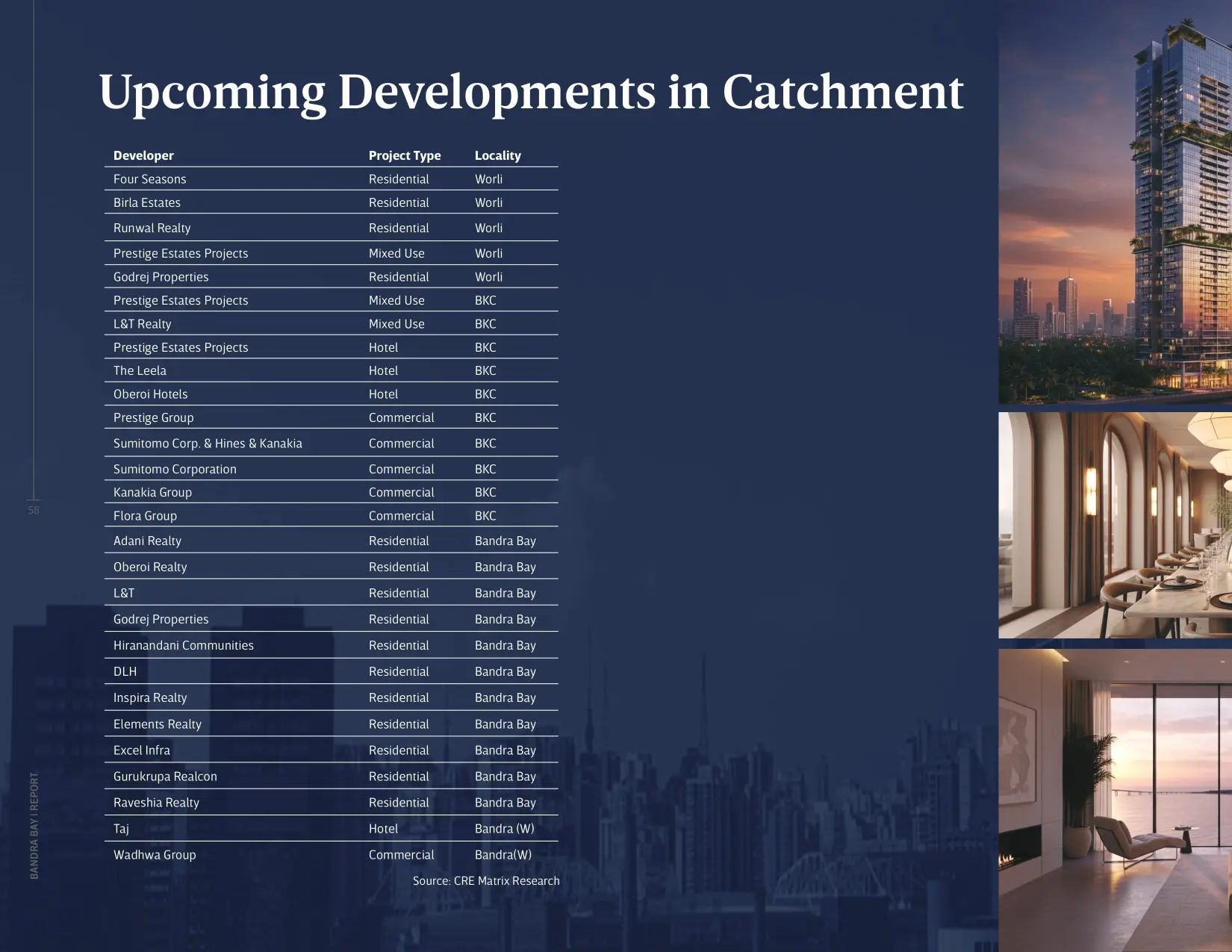
The district features India’s strongest luxury developer lineup:
- Adani Realty
- Hiranandani Communities
- Oberoi Realty
- Godrej Properties
- L&T Realty
- Elements Realty
- Plus select boutique luxury developers
The depth of this roster creates brand trust—critical for HNIs, NRIs, and corporate buyers.
3.4 Premium Pricing Cluster
Bandra Bay already sits in Mumbai’s top-tier pricing zone:
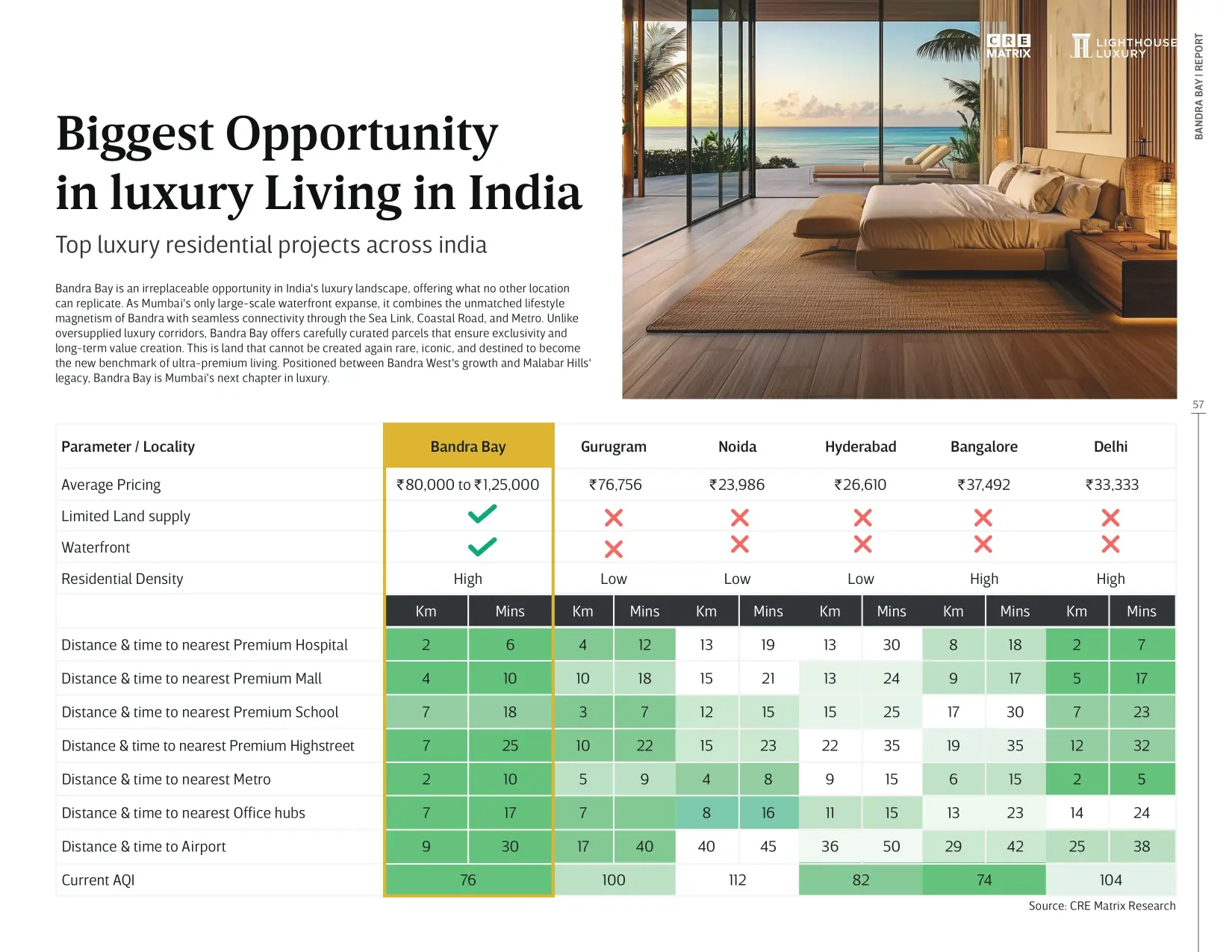
- ₹80,000–₹1,25,000 per sq.ft. depending on parcel
- 15–20% premiumfor sea-facing inventory
- Luxury homes make up only 4% of unit sales but contribute 17% of total market value
- Rare new construction in Bandra’s western belt
This puts Bandra Bay on track to become the most valuable waterfront district in India.
4. BKC: Terminal for India’s First Bullet Train
If Bandra Bay is the lifestyle face of the triangle, BKC is its economic powerhouse.
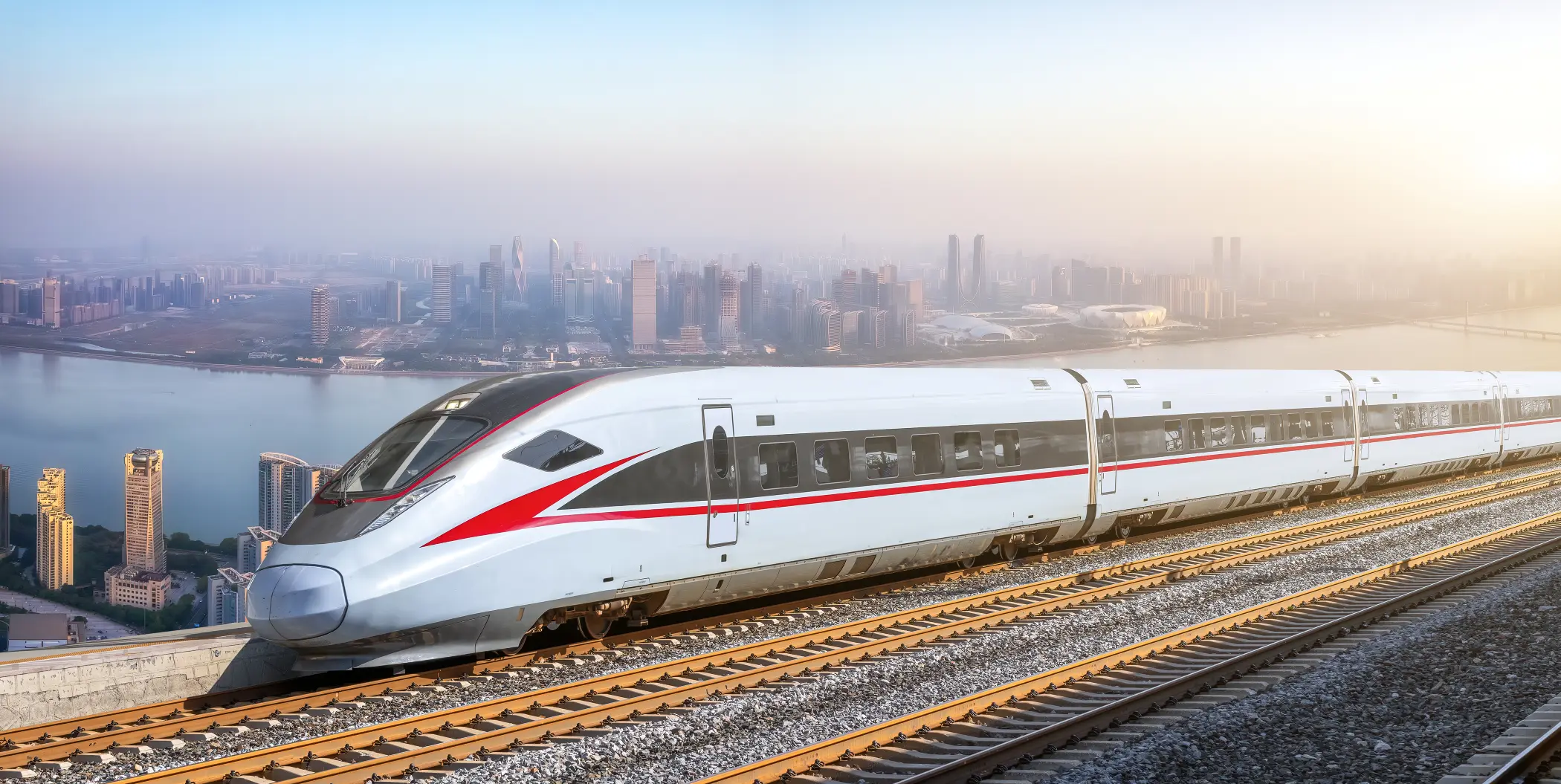
4.1 BKC as the Bullet Train Destination
The BKC station is the Mumbai anchor for India’s first high-speed rail line:
- Travel time to Ahmedabad drops to ~2 hours
- Multimodal convergence with Metro Line 3
- International-style underground station design
- Highest passenger-handling capacity among proposed HSR stations
This makes BKC a future “gateway district” for interstate business travel.
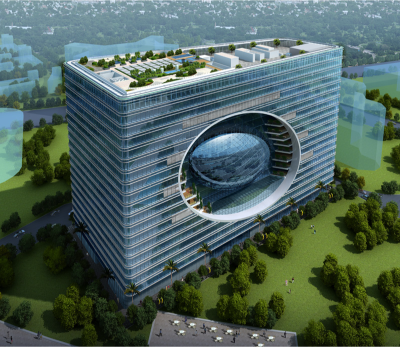
4.2 BKC as the Financial Capital of India
BKC already hosts:
- Investment banks
- Big Four consulting firms
- Foreign consulates
- Global corporations
- Luxury hotels
- India’s most expensive commercial real estate
The HSR terminal amplifies this influence—turning BKC into India’s most important commercial–mobility hub.
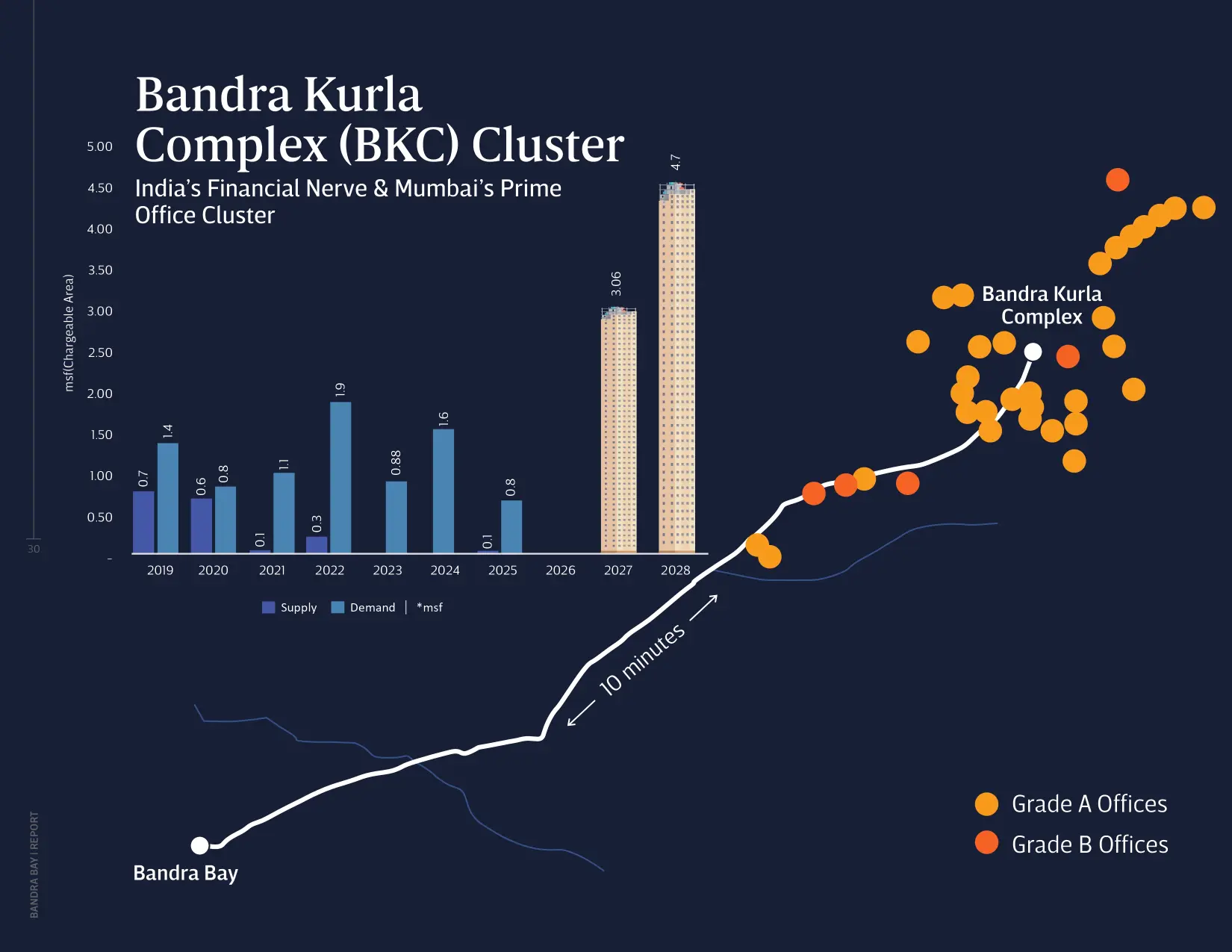
4.3 The Bandra Bay—BKC Proximity Advantage
The two districts sit 5–8 minutes apart, creating:
- Short commutes for CXOs
- Executive housing near high-frequency business hubs
- A global-style “live-near-financial-district” ecosystem
Exactly what you see in:
- Singapore (Marina Bay + CBD)
- Hong Kong (Central + Mid-Levels)
- Dubai (Marina + JLT + Media City)
The synergy is intentional—and economically powerful.
5. The Bullet Train Effect: How High-Speed Mobility Reshapes Demand
High-speed rail doesn’t just shorten travel time—it changes real estate gravity.
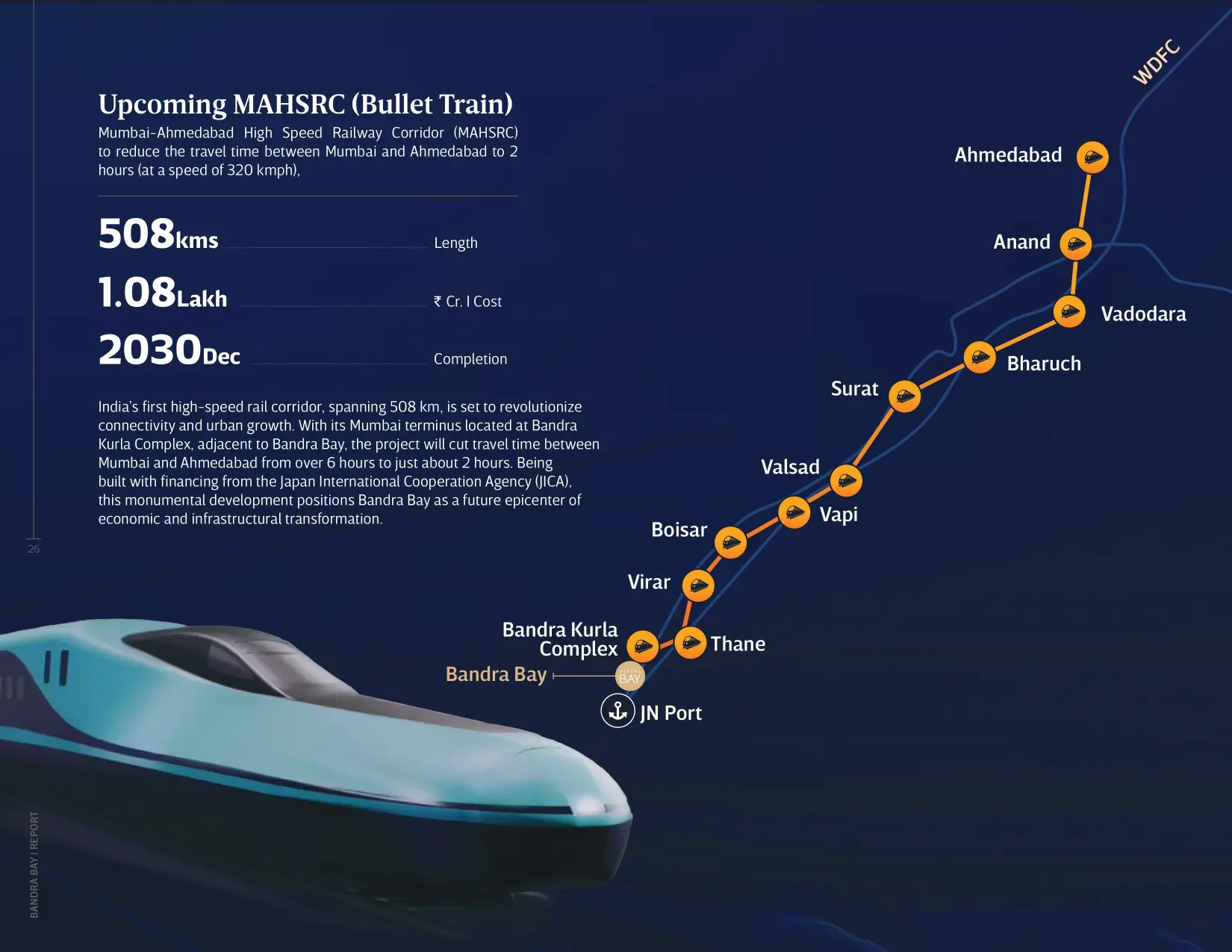
5.1 India’s First Interstate Luxury Corridor
The Bullet Train links key economic nodes:
- Mumbai
- Surat
- Vadodara
- Ahmedabad
This corridor contributes disproportionately to India’s GDP.
With HSR access at BKC, Bandra Bay becomes:
- The preferred home base for business families between Mumbai and Gujarat
- A natural magnet for NRI investors
- A long-term urban lodestone for premium demand
5.2 Global Pattern: How HSR Hubs Upgrade Neighbourhoods
High-speed rail terminals don’t just change transportation—they reshape entire urban economies. Every global city that has introduced high-speed rail has seen a clear, data-backed pattern: the neighbourhoods closest to the terminal experience the fastest and most sustained real estate uplift.
This isn’t speculation. It’s a repeated urban phenomenon observed across Asia, Europe, and the Middle East.
Tokyo — Shinagawa’s Transformation
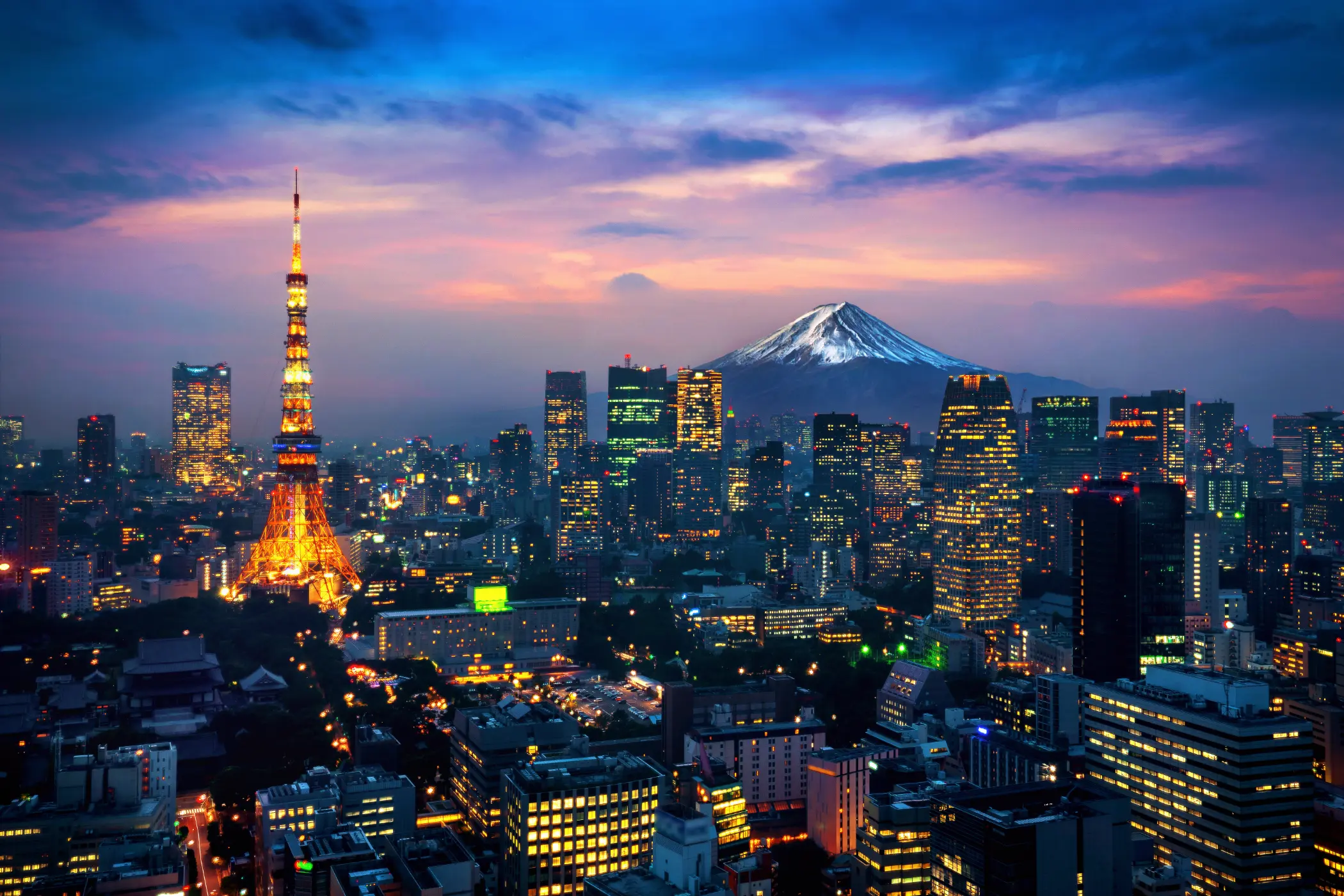
Before Japan’s high-speed rail expansion, Shinagawa was a functional, mid-tier commercial district. Once it became a major Shinkansen station, the area saw:
- A corporate relocation wave
- New 5-star hotels and convention centres
- A surge in luxury residential developments
- 2–3x price appreciation over a decade
Shinagawa evolved into one of Tokyo’s most globally connected business hubs—purely because of its HSR position.
London — Canary Wharf Meets Crossrail (Elizabeth Line)
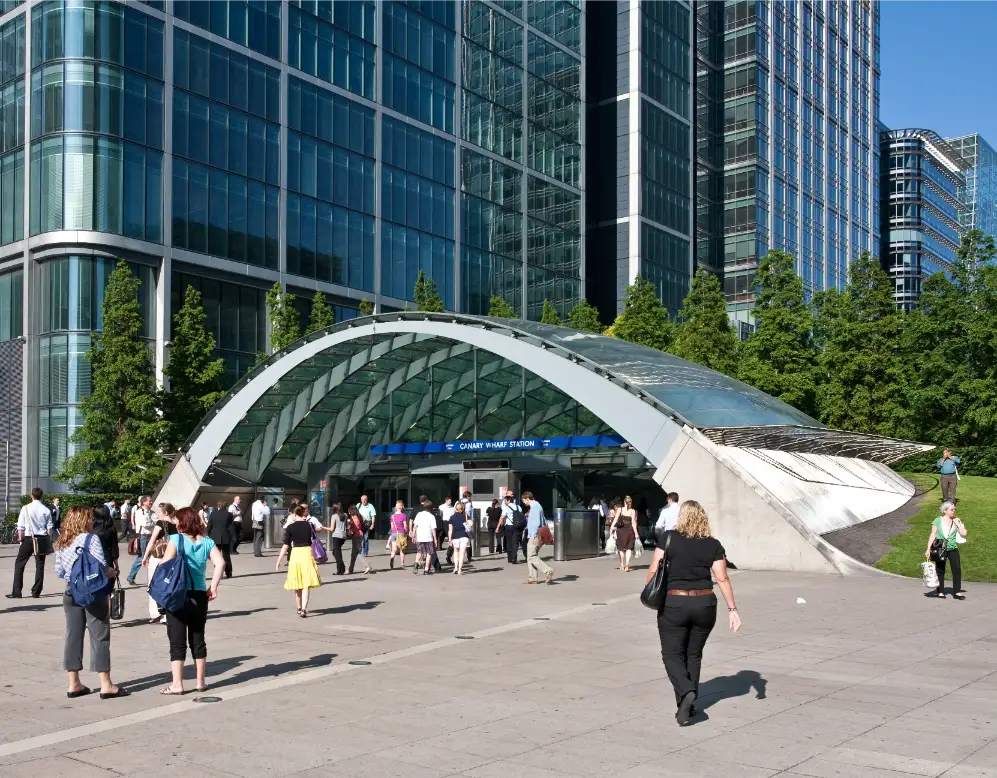
London’s financial east saw stagnation after the 2008 recession. But the Elizabeth Line (Crossrail), linking Canary Wharf directly to Heathrow, Farringdon, Paddington, and Reading, triggered:
- The fastest office absorption cycle in a decade
- A premium uplift in residential towers
- Massive footfall growth in retail districts
- Sustained rental demand from global professionals
This mirrors what is expected between BKC (HSR terminal) and Bandra Bay (luxury waterfront district).
Paris — La Défense & TGV Integration
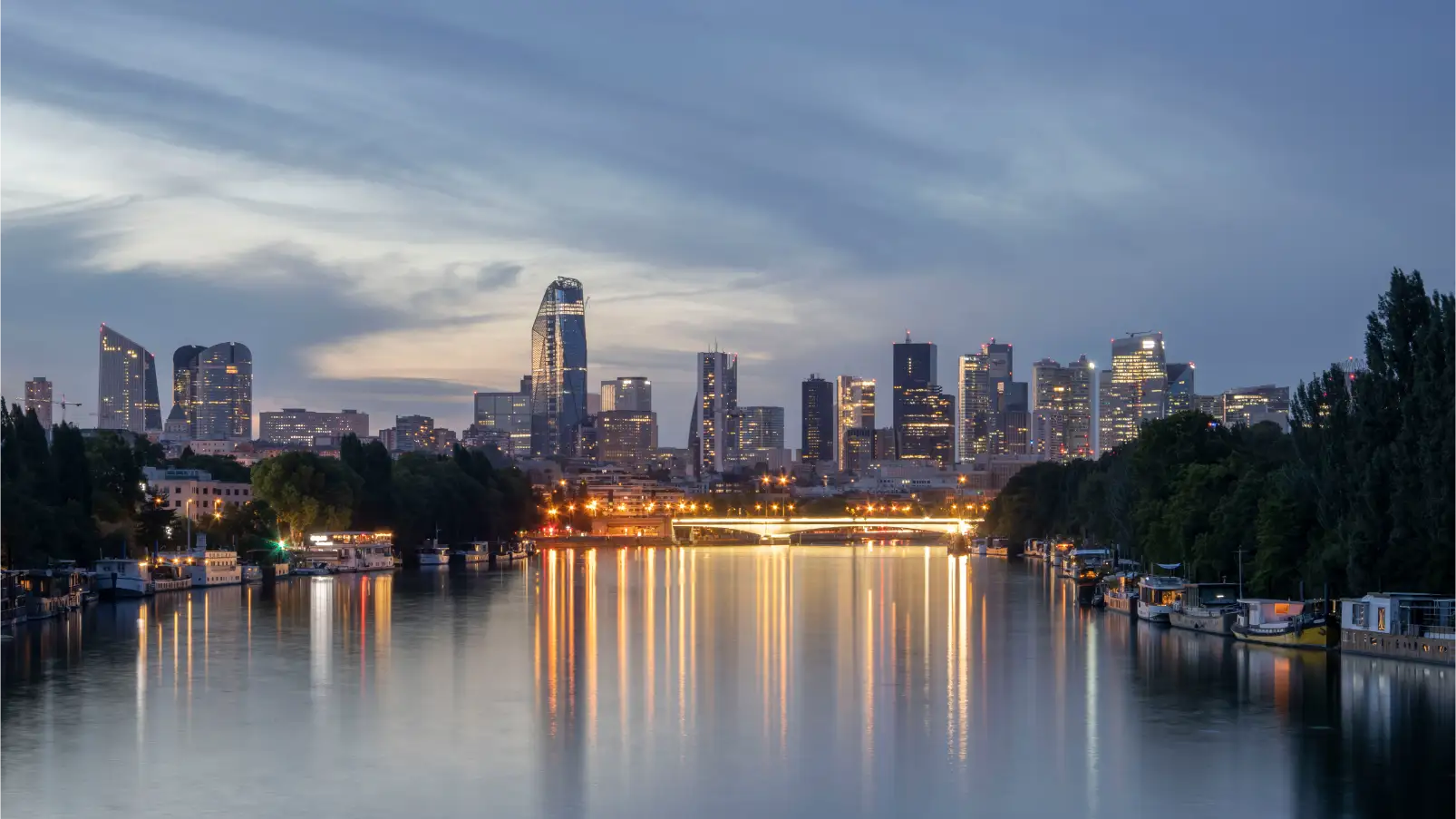
La Défense, Europe’s largest business district, saw a structural upgrade when TGV routes strengthened connectivity:
- Global corporates consolidated their Paris HQs here
- Residential precincts like Neuilly-sur-Seine surged
- Cross-border workforce movement increased
- Infrastructure expansion accelerated
The same pattern applies to Mumbai, where BKC’s HSR terminal becomes the gateway for interstate corporate movement.
Shanghai — Hongqiao Mega-Hub
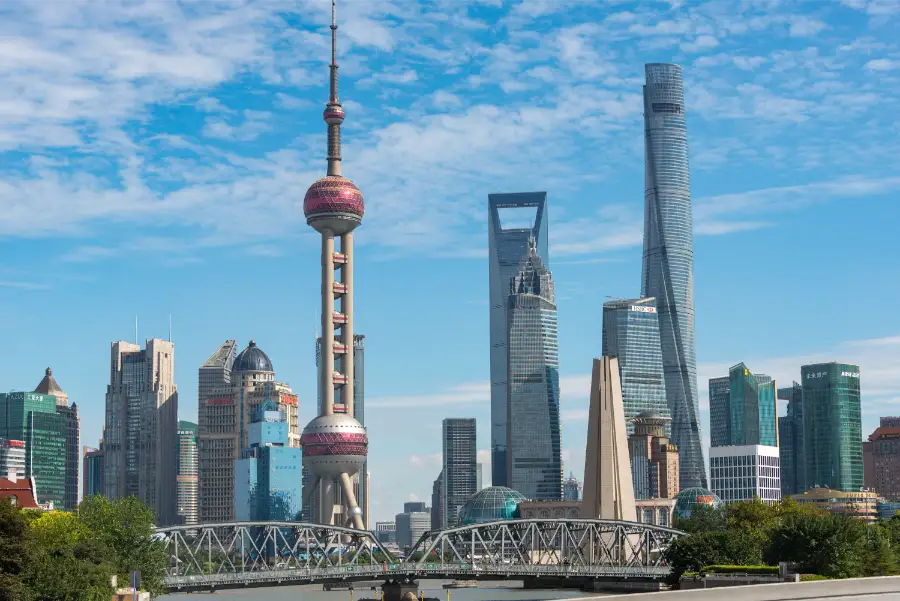
China’s most successful multi-modal hub created the "Hongqiao Effect":
- Integrated HSR, metro, airport, and highways
- Massive commercial uplift
- High-end residential demand in Minhang and Changning
- Constant appreciation tied to business mobility
Mumbai’s BKC–Bandra Bay belt is essentially building a similar integrated ecosystem: corporate district + high-speed terminal + premium housing + airport connectivity.
Dubai — Though Not HSR, Transit Nodes Drive Entire Districts
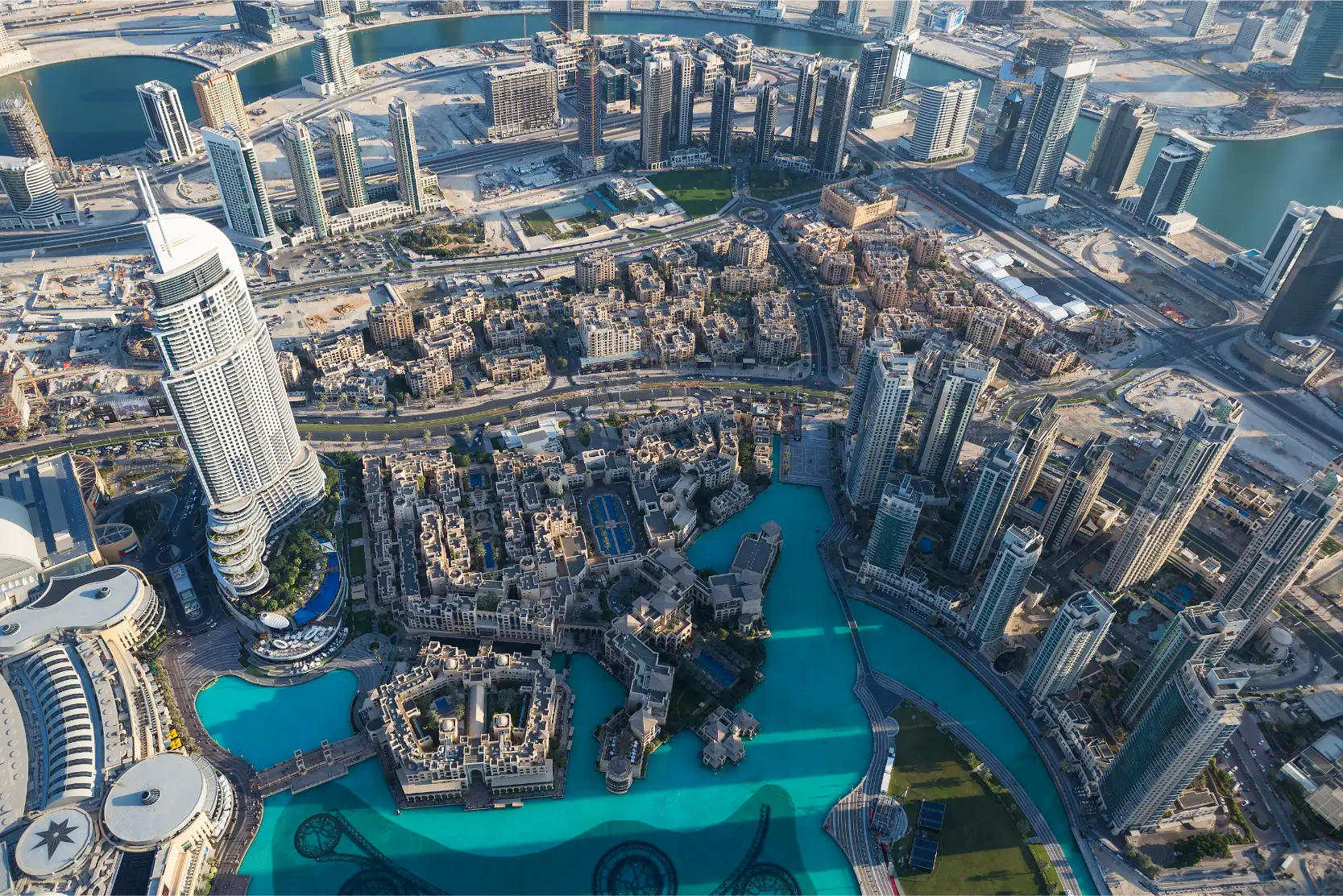
Even without HSR, Dubai’s pattern reinforces the trend:
- Dubai Marina surged due to proximity to metro + major highways + airport routes
- Business districts aligned around transit nodes outperform surrounding areas
This shows one universal rule: mobility drives value.
The Common Thread Across All Cities
Across Tokyo, London, Paris, Shanghai, and Dubai, one insight repeats:
When high-speed mobility meets a financial district and a premium residential zone, the triangle becomes the strongest economic engine of the city.
And this is exactly what Mumbai is replicating with:
- BKC → financial + mobility hub (Bullet Train terminal)
- Bandra Bay → luxury residential & waterfront lifestyle hub
- HSR → India’s first interstate high-speed corridor
The global pattern makes one thing clear:
Bandra Bay will absorb the residential premium uplift that the BKC Bullet Train Terminal generates.
5.3 Residential Impact
Expect:
- Increased pre-launch absorption
- Premium pricing sustaining above city average
- High-end rental demand from weekly business commuters
- Strong NRI buying driven by interstate ease-of-access
This is long-term structural demand—not a temporary spike.
Watch how the new Golden Triangle comes together.
A quick visual walkthrough of the connectivity shaping Bandra Bay’s future.
https://www.youtube.com/watch?v=FEd-LDVecNI6. The New Mobility Matrix: Coastal Road + Metro + HSR
The Golden Triangle is not just defined by its anchors—it’s defined by seamless mobility between them.
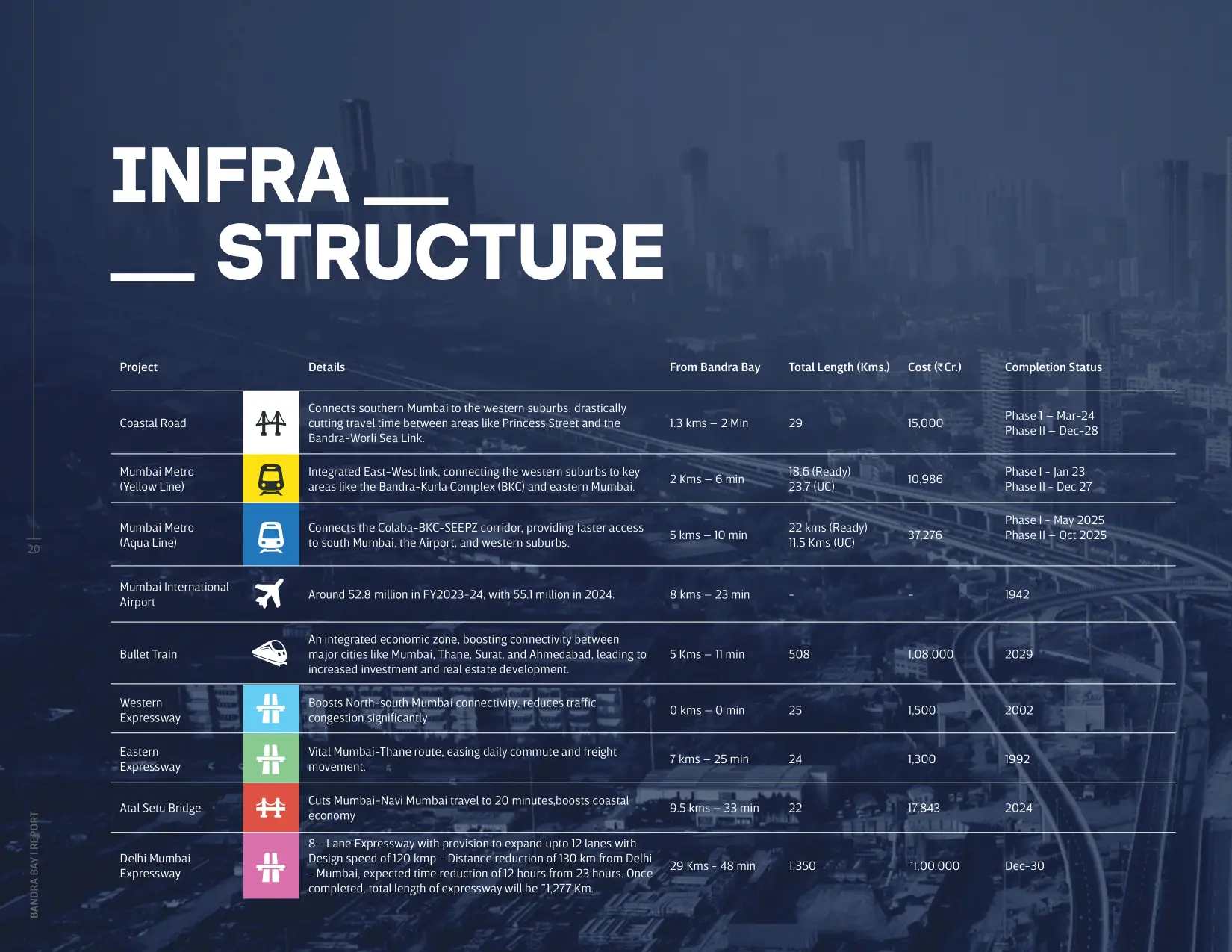
6.1 Coastal Road → South Mumbai in Minutes
The Coastal Road extension directly impacts Bandra Bay:
- Faster commute to Marine Drive
- Smoother movement for CXOs and NRIs
- Scenic, uninterrupted drives along the coastline
This connects Bandra Bay to Mumbai’s oldest and most valuable business centres.
6.2 Metro 2B & Metro 3 Integration
Metro Line 3 is the game-changer:
- High-speed connectivity from Cuffe Parade → BKC → Airport → SEEPZ
- Direct station adjacency with the Bullet Train
- Rapid access from Bandra Bay via Reclamation and feeder routes
Metro 2B adds:
- Connectivity to Juhu, DN Nagar, and eventually Mira Road & Dahisar
Combined, these create a three-layer transit mesh around Bandra Bay.
6.3 Atal Setu + MTHL Connect Mumbai to Navi Mumbai
With the new trans-harbour link:
- Bandra Bay gains indirect but critical access to Navi Mumbai Airport
- Eastern suburbs + Panvel growth feed demand into the Western waterfront
- Luxury homeowners gain unprecedented regional movement flexibility
6.4 The Golden Triangle Mobility Advantage
This is the only zone in Mumbai where all major infrastructure networks converge:
- Coastal Road
- Metro Lines 2B & 3
- Sea Link
- HSR Terminal
- MTHL (via BKC–SCLR link)
No other location in India has this level of intermodal connectivity.
7. Economic Synergy: How the Triangle Reshapes Mumbai’s Growth Map
The Golden Triangle creates a multiplier effect.
7.1 Price Appreciation Drivers
Backed by CRE Matrix Data:
- Luxury units = 4% of supply, 17% of value Luxury homes form just 4% of total units sold, yet account for 17% of the market’s transaction value
- Waterfront + BKC proximity = ultra-premium elasticity
- Scarcity of new Bandra inventory pushes long-term rates higher
Expect Bandra Bay to outperform Worli, Juhu, and Bandra West in the next decade.
7.2 Corporate Relocation & Expat Influx
Corporates prefer BKC for:
- Headquarters
- Banking & finance operations
- Consulate proximity
- Global travel convenience
Expats & CXOs naturally gravitate toward:
- New luxury stock
- Waterfront views
- High-amenity living
Bandra Bay becomes the default residential choice.
7.3 Hospitality & Retail Uplift
The triangle supports:
- New 5-star hotels
- High-street retail
- Premium dining
- Coastal leisure zones
The spillover effect from HSR tourism + BKC business mobility strengthens local economy.
7.4 Workforce Mobility Boost
With Metro + HSR + Coastal Road:
- Talent movement becomes frictionless
- Hybrid work culture thrives
- Businesses expand beyond traditional CBDs
This increases long-term absorption and stabilizes demand.
8. Lifestyle Synergy: Why HNIs & NRIs Choose the Triangle
It’s rare for luxury living, mobility, and business access to align in one place.
8.1 The Waterfront–Finance–Connectivity Sweet Spot
HNIs and NRIs prioritize:
- High-quality urban experiences
- Proximity to global business districts
- Transportation convenience
- Scenic, walkable waterfronts
Bandra Bay + BKC + HSR deliver all four.
8.2 Global Benchmark Parallels
This triangle matches the world’s top lifestyle corridors:
- Marina Bay (waterfront) ←→ CBD (finance) ←→ Changi (mobility)
- Dubai Marina (lifestyle) ←→ JLT (work) ←→ DXB (transport)
Mumbai now has its equivalent—finally.
8.3 Everyday Convenience
Residents get:
- Promenade, jogging tracks, cycling paths
- Jio World Drive, Bandra West high-street
- DAIS, MET, Lilavati, Hinduja nearby
- Rapid commute to BKC, Worli, South Mumbai
This is luxury living with zero compromise.
9. Real Estate Impact: ROI, Liquidity & Long-Term Potential
The Golden Triangle shapes a decade-long appreciation cycle.
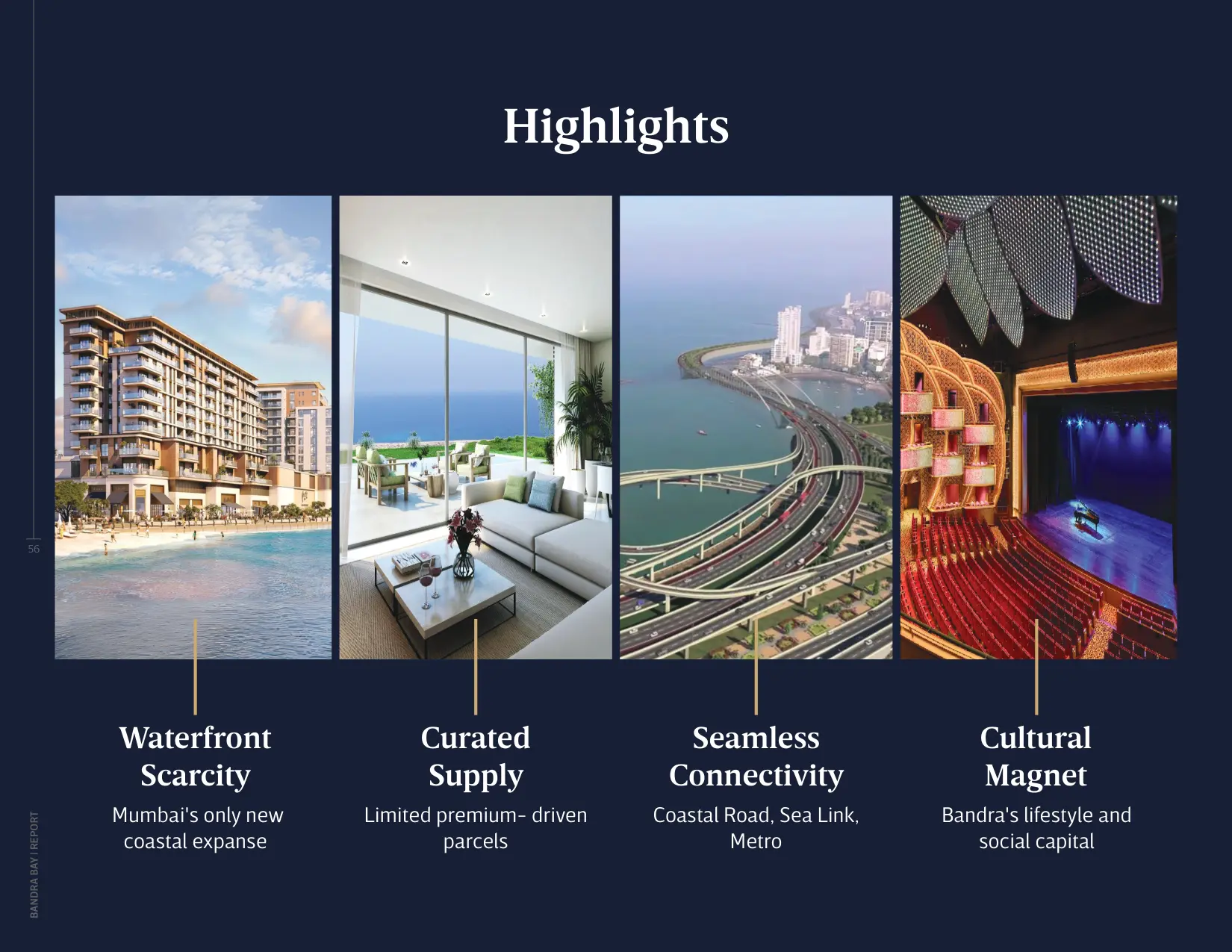
9.1 Scarcity of Waterfront Land
No additional reclamation is possible.
Supply is finite → Prices rise steadily.
9.2 Architecture + Skyline Effect
Bandra Bay’s curated skyline enhances:
- Resale value
- View premiums
- Long-term brand identity
Skyline = Value in all global cities.
9.3 Rental Yield Strength
Driven by:
- BKC professionals
- HSR-linked business travellers
- NRIs seeking premium rental homes
Expect yields above Mumbai’s luxury average.
9.4 The Appreciation Window: 2025–2035
Triggered by:
- Coastal Road completion
- Metro 3 completion
- HSR operational
- Bandra Bay projects delivered
This decade becomes the strongest investment cycle for the district.
10. Future Outlook: India’s Most Powerful Urban Triangle (2025–2040)
By 2040, the Bandra Bay–BKC–HSR Triangle will redefine Mumbai’s global identity.
- Bandra Bay becomes India’s most photographed skyline.
- BKC becomes the financial + mobility nerve centre of the country.
- The HSR terminal becomes the interstate gateway for luxury commuters.
- More wealth, more capital, more global attention concentrates in this zone than anywhere else in India.
This is the Mumbai that global Indians, investors, and corporations have been waiting for:
A waterfront city with world-class infrastructure—living, working, and mobility converging seamlessly.
Bandra Bay is no longer just a location.
It is the western pillar of India’s most powerful urban triangle.